
What’s next for Magic? Orlando still unsure if Banchero-Wagner pairing works
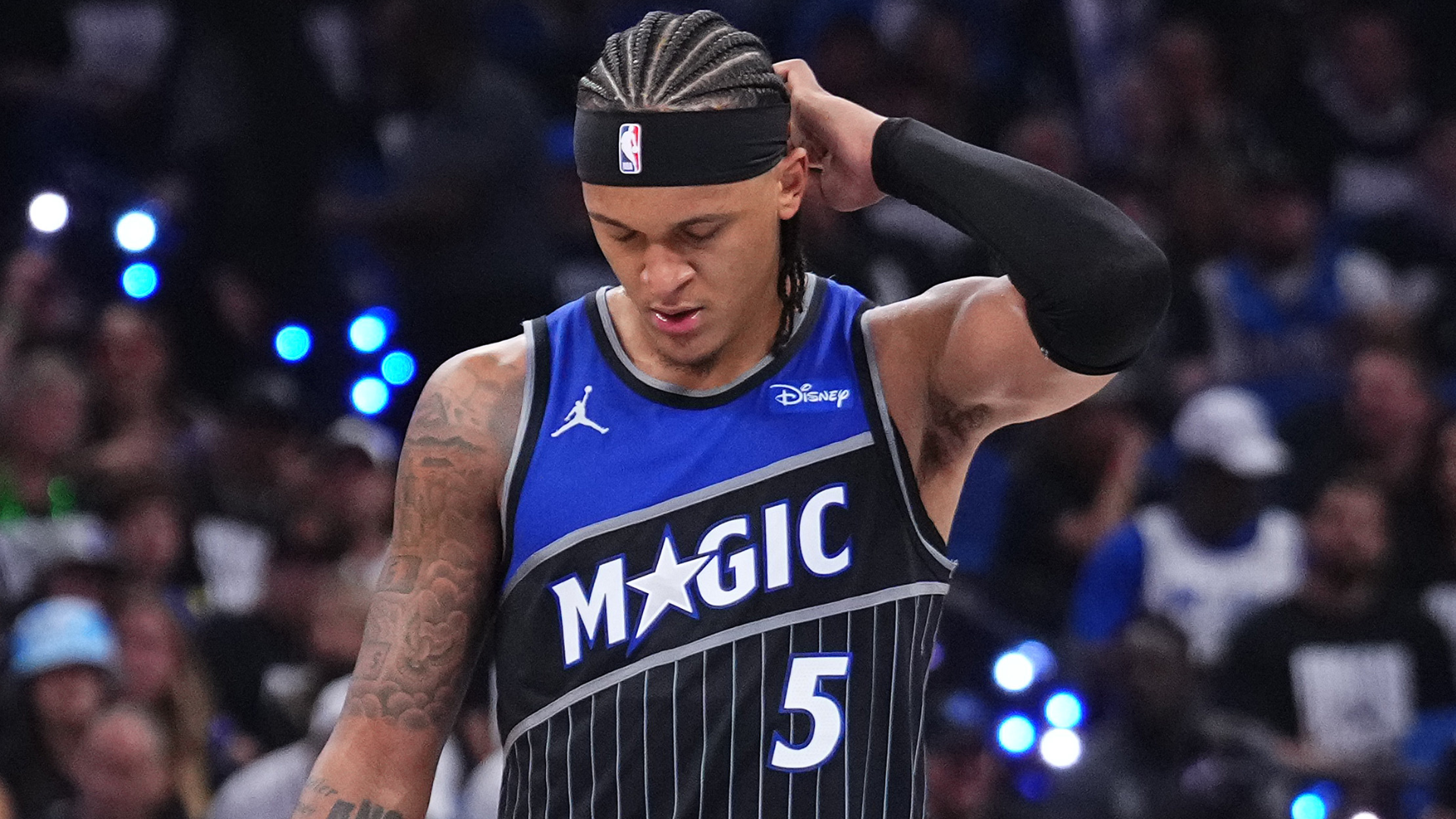
This was almost so straightforward. The Orlando Magic were supposed to compete for the No. 1 seed in the Eastern Conference. Their regular season ended with a loss to Boston’s B-Team that knocked them down to the No. 8 seed. When they lost their first Play-In Tournament game to the Philadelphia 76ers, they were treated as little more than Charlotte’s stepping stone into the playoffs. Jamahl Mosley was a dead coach walking. The roster underwhelmed for 83 games in an 82-game season. The marching orders here were clear: revive the offense, fix the defense and settle the awkward partnership between two imperfect young stars by any means necessary.
And then, seemingly out of nowhere, the team Orlando spent six months waiting for finally arrived. They decimated Charlotte to snag the Eastern Conference’s final playoff spot, punched the 60-win Pistons in the mouth in a Game 1 road stunner, took Games 3 and 4 at home and had the No. 1 seed on the ropes.
Everything came together. After falling out of the top five defensively for the first time since 2023, the Magic were suddenly impenetrable. An up-and-down season for Paolo Banchero culminated in yet another strong playoff series. Years of lineup data suggesting that the Magic were better offensively when Banchero and Franz Wagner played separately flipped in a Detroit series in which the Magic posted a strong 115.6 offensive rating when they shared the court. This was everything the Magic hoped this team could be. And then it was gone.
Wagner suffered a calf strain. Orlando’s best Cade Cunningham defender was suddenly gone, and sure enough, Detroit’s superstar guard dropped 45 points in Game 5. The Magic got out to a hot start in Game 6, but collapsed without Wagner creating offense. They scored just 19 second-half points and lost their last remaining home game. By Sunday’s Game 7, the Magic were ready to turn back into a pumpkin. Their season ended in much the same way it began and remained until mid-April: in abject disappointment. That leaves the Magic with an unanswerable question: which version of their team was the real one? The version that underwhelmed for six months? Or the one that played the five most important games of the season?
Why the Magic have less time than it seems
Most younger teams would probably be happy to run it back and let next season answer the question for them. The Magic aren’t really in a position to do that. By acquiring Desmond Bane, the Magic set themselves up for a monster payroll in the very near future. Bane and Wagner are on rookie max deals. Jalen Suggs isn’t far behind. And three more players are about to get meaningfully more expensive:
- Banchero’s max rookie extension, which will pay him $239 million over five years, kicks in. He will make around $41 million next season.
- Wendell Carter Jr. is about to start a three-year, $58.6 million extension. Before the Detroit series, that deal looked iffy. He’d just had his second consecutive poor 3-point shooting season, and his rim-protection numbers, never stellar, were also trending down. Then he completely outplayed likely All-NBA center Jalen Duren for seven games. Is that suddenly a good contract?
- Anthony Black is eligible for a rookie extension of his own. Though he comes off the bench for the Magic, he’d likely demand starter money in order to re-sign. The floor here is probably the four-year, $90 million deal Shaedon Sharpe got last offseason. Sharpe is the better scorer, but Portland barely trusted him to play in its first-round series against San Antonio. Black laps him in the impact metrics and played a bigger role against Detroit. With similarly iffy shooters Christian Braun and Dyson Daniels making $25 million per year, Black would be justified in at least demanding to cross $20 million annually.
The Magic are projected to have only about $4 million in room below the second apron next season with just 12 players on the roster. They have ways of generating more room, most notably by waiving the partially guaranteed Jonathan Isaac, but once a hypothetical Black extension kicks in for the 2026-27 season, there’s no getting around the second apron. If the Magic keep this same, expensive six-man core together with any semblance of depth, that’s where they’re headed. That seems untenable since, you know, this group hasn’t won a playoff series yet.
Maybe you roll the dice. Deny Black an extension while planning to use restricted free agency to leverage a more favorable outcome in a year, and use that extra time you’ve given yourself to evaluate the core further. But during all of that extra time you’re taking, the rest of the league takes as well. If next season goes the way this regular season did, that makes it that much harder to get fair value if you decide you need to flip a core piece. Go ask Ja Morant and Trae Young how quickly an expensive player can lose trade value in the apron NBA.
Right now, Banchero is a 23-year-old No. 1 pick with an iffy shot but a history of rising in the playoffs. Would possible trade partners lose faith in the jumper if it doesn’t come around next season? Wagner missed 22 games last season and more than half of this season. How concerned would the rest of the league be about his durability? Or, for that matter, Suggs’? Neither Wagner nor Suggs is a reliable shooter either.
Whatever these players are worth now, they probably won’t be in a year. If it turns out the Magic were as good as they’d hoped all along, stay healthy and compete next season? Great, you have your core. It’s just as possible that the Pistons — given their utter lack of shooting — were a uniquely beneficial matchup for the Magic, that their shooting never comes around, and that their most important players just can’t stay on the court. At that point, well, you also have your core… just more in the sense of being stuck with it.
So what’s on the table for the Magic this offseason?
The easiest move a team can make is always a coaching change. They’re unilateral and uncapped, and a 3-1 collapse is reasonable cover if the Magic planned to fire Mosley anyway. He’s never coached the Magic to an above-average offense, and Banchero has made some notably critical public comments.
The Magic tried to hire Billy Donovan all the way back in 2007. He took the job, changed his mind and returned to college. He’s on the open market now, looking for a team that’s ready to win, and he’s proven remarkably adaptable with lesser talent in his previous stops. Considering his ties to the area, he’d seem like the obvious favorite to coach the team next season if Mosley is indeed fired.
There are smaller tweaks available to the roster if the Magic want to pursue them. They signed Tyus Jones in free agency last year, seemingly knowing they’d need a traditional point guard to make their offense functional. That didn’t work, but the idea would be worth revisiting with a different player. We don’t know what Chicago’s long-term plans are since we don’t know who’s going to be running the team yet, but Tyus’ younger brother Tre might be worth a low-cost swing if he’s available. The Suns will likely do everything in their power to re-sign Collin Gillespie, but he’d fit the bill if he’s available in free agency.
If they’re not getting a point guard, more shooting is the bare minimum. The NBA is friendlier to big ball-handlers than it has ever been. The Magic bet their future on that idea. But Banchero and Wagner can’t be expected to carry an offense with the 24th-highest 3-point attempt rate and the 27th-highest 3-point percentage in the NBA. They need space to operate and don’t have it.
But given the severity of the impending financial crunch, bigger swings have to at least be considered. One solution to an expensive roster is consolidation: trade multiple expensive players for one. Orlando has been a popular Giannis Antetokounmpo sleeper for months. Orlando’s brain trust of Jeff Weltman and John Hammond was in Milwaukee when the Bucks drafted him, and if the Magic did want to break up the Banchero-Wagner duo, Milwaukee would likely be interested in either. Still, with so little shooting on the roster, Orlando would need more changes to accommodate him.
There’s also the idea of recouping the picks surrendered for Bane by dealing out Banchero or Wagner now. Given their ages, there would likely be interested suitors. The goal here would be less to get picks than it would be to get liquidity. Hand the offense to whoever you keep, figure out what’s needed around that player, and then spend the picks you get to find it later. Banchero’s health and stature probably make him easier to trade, and the numbers suggest Orlando has fared better with Wagner anyway. Few front offices have the stomach to trade away their own top choice this early in his career, but it’s a decision the Magic may have to face sooner or later anyway.
These conversations would be a bit more substantial had the Magic simply flamed out as expected. It’s far easier to justify substantial change when you know you’re not good enough than it is when you think you might be. The Pistons series was agonizing in that respect: tantalizing enough to force you to reconsider your most drastic plans, yet not ultimately successful enough to demand a course correction. By getting the faintest glimpse into what their team could be, the Magic are entering this offseason blinder than ever.
TNG – Latest News & Reviews


