
NBA offseason grades 2.0: Grading every team’s summer as 76ers get the only A+
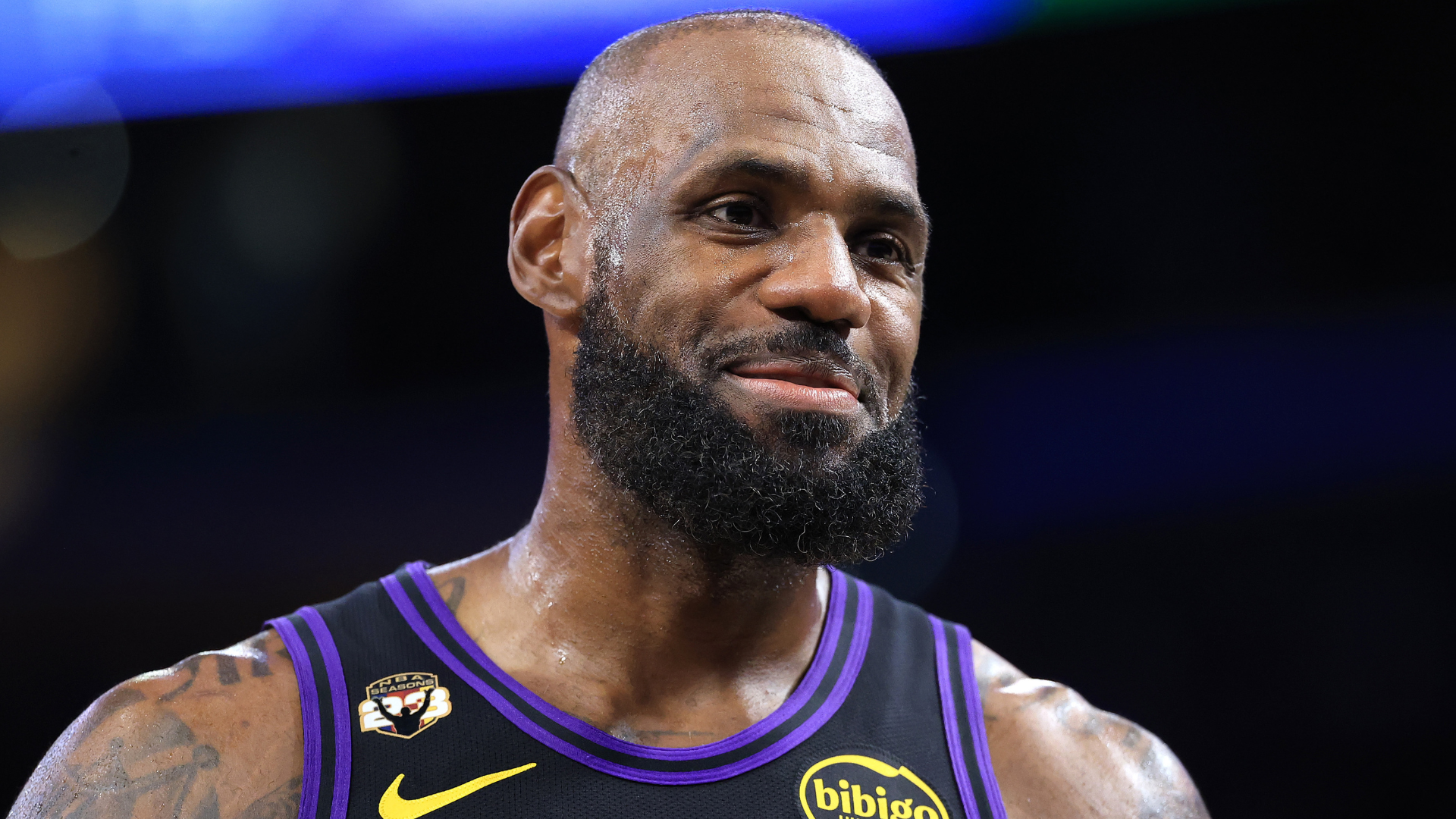
Typically, we publish offseason grades relatively early into July, when the free agent rush has ended and teams have done the bulk of their roster-building. LeBron James delayed that process this offseason. The NBA’s most prominent free agent held up at least five teams known to have actively pursued him, and considering some of the reporting surrounding his interest in possible teammates around the league, his free agency indirectly affected a few other teams.
So we split the difference, publishing early grades for both the Eastern and Western Conferences while resolving to update them after James made up his mind. So here we are. It is now July 27. LeBron James is a member of the Philadelphia 76ers. Four other teams failed to lure him, and while the offseason isn’t quite complete, we can at least tie a slightly more presentable bow on this crazy summer of movement.
Below, are our updated grades in light of James’ decision. We will begin with more thorough evaluations of the five teams in the hunt for James and then conclude with streamlined versions of everyone else’s grades. For a more thorough accounting of each team’s offseason, look back on our previously published conference grades. With that settled, let’s begin.
The five LeBron teams
Philadelphia 76ers: A+
The 76ers are by no means a perfect team or even the Eastern Conference favorite. There’s a ton of downside potential here between LeBron’s age, Joel Embiid’s injury history, the underwhelming defense and the potential for stylistic conflict between all of these high-usage stars.
But consider what went out and what came in. The 76ers turned Paul George, two first-round picks, the mid-level exception and likely two deep bench players with (Dalen Terry and Johni Broome) into LeBron James, Jaylen Brown, Dean Wade, Anfernee Simons and Kentavious Caldwell-Pope.
As a matter of pure resource allocation, that is an unbelievable offseason. There may be disaster potential here, but there’s also championship upside. In a world with two favorites as dominant, as young and as asset-rich as the Oklahoma City Thunder and San Antonio Spurs, high-risk, high-reward is the only path into genuine championship contention. Until the Toronto Raptors officially complete their Kawhi Leonard trade, the Sixers are the only team in the NBA to make the jump from “no realistic chance” to “somewhat realistic chance” since the Finals ended. To do that for only two first-round picks and no loss of young talent is a dream offseason for new lead exec Mike Gansey.
Original grade: A
Minnesota Timberwolves: B
The Timberwolves simultaneously had the easiest James fit and the least-urgent James need. They have no power forwards after trading Naz Reid and Julius Randle, and James would have furthered their efforts to introduce more shot-creation onto their roster next to Anthony Edwards. With James, the Timberwolves would have made the same leap that the 76ers did from non-contenders to genuine ones.
But Edwards is only going into his age-25 season, and every core Timberwolf aside from Rudy Gobert is in that age range. We can judge them on a longer time horizon than some of these other James losers, and in the bigger picture, Minnesota still did well. LaMelo Ball still carries substantial health, defensive and maturity risks, but the Timberwolves had to take a major talent swing to ever catch up to the Spurs and Thunder. He’s not perfect, but he makes it far harder to double Edwards and the two of them together give the Timberwolves two of the best pull-up 3-point shooters in basketball. That’s a real strategy to stretch those two dominant defenses.
Minnesota isn’t perfect, but the Wolves have a core they can roll with for several years. If it takes a year to find a power forward, it takes a year. They raised their long-term ceiling substantially by turning Randle, Reid and one first-round pick into a talent as rare as Ball.
Original grade: B
Miami Heat: B-
The Heat simultaneously needed to trade for Giannis Antetokounmpo and probably gave up a bit too much for Giannis Antetokounmpo. It’s not that what they gave up was especially valuable so much as they gave up almost every non-Bam Adebayo asset they had without assuring themselves a championship contender. That’s why the James pursuit mattered so much to Miami. The Heat genuinely needed his shot-creation, because outside of Antetokounmpo, there isn’t much of it here.
They obviously didn’t get James. That doesn’t make this offseason a failure, but it recontextualizes it as a step in a longer-term process rather than an all-out championship pursuit. The Heat simply are not acting like a team in championship-or-bust mode. They front-loaded Andrew Wiggins’ new contract to save future financial flexibility when lowering his 2026-27 salary would have made it easier to build this year’s team. They only gave Tim Hardaway Jr. a one-year deal for less than half of the mid-level exception when a longer, pricier deal could’ve netted them someone better. Despite Antetokounmpo being 31 and having calf injury concerns, the Heat are taking their time building around him.
I can’t say I agree with that philosophy, but they went from having no All-NBA players to having an MVP candidate. Their organizational position had improved with or without James, and if Antetokounmpo can sustain his prime for several years, their restraint elsewhere on the roster could pay dividends later. For now, though, the Heat are not good enough to win this revamped Eastern Conference. They paid a price for Antetokounmpo that demands genuine contention, so if you believe in the Heat, you’re betting on the Pat Riley-Erik Spoelstra infrastructure to figure it out over time.
Original grade: B-
Golden State Warriors: C-
There is a lot of doom and gloom surrounding the Warriors right now, and it’s warranted. The Stephen Curry championship window is closed. Probably permanently. Here’s the thing, though… that was true before they missed out on James. Putting LeBron on this team wasn’t getting Golden State into the championship picture. Neither was getting LeBron and Anthony Davis. The core is too old and injury-prone. The roster is too thin. The NBA has moved past simply stacking a bunch of famous people and collecting trophies.
There was not an obviously available set of win-now moves the Warriors could have made, even if they’d put every single draft pick in their coffers on the table, that could have made them genuine 2027 title contenders. From that perspective, they were smart not to trade any picks. What would have been the point? Why mortgage the future to perhaps get Curry a single round further in the postseason? James would have made next season more fun for the Warriors, but he wouldn’t have drastically altered their fortunes.
They did well to draft Yaxel Lendeborg at No. 11. The Summer League MVP will be an immediate impact player at an enormously scarce position. The contracts they gave to their own free agents were all reasonable. There’s nothing wrong with what they did, and they even deserve credit for what they didn’t do by resisting the urge to make a bad trade for an aging star to tempt James. But this organization’s fortunes are sinking, and they did little to change course.
They didn’t have much room to do so, of course. Stephen Curry is so sacred to that organization and city that he can’t be traded without a request. Draymond Green is still technically a free agent, and the reporting for now suggests he’ll be re-signed at around the salary he declined through his player option. But a little creativity here would have been warranted. A by the numbers “keep almost everyone” summer won’t cut it here, even if they managed that version of their offseason as well as they reasonably could have.
Original grade: C+
Cleveland Cavaliers: D
Though they were motivated in part by ducking the second apron, the Cavaliers lost Dean Wade and Keon Ellis as they awaited LeBron’s decision. There goes their on-ball defense. The potential replacements out there are hardly inspiring. Jonathan Kuminga has spent his entire career looking for shots the Cavaliers can’t give him. Mario Hezonja may have improved in Europe, but he washed out of the NBA for a reason. Cleveland is banking a lot on the growth of Jaylon Tyson. That in itself isn’t a crazy bet. Tyson is quite promising. But they’ve lost depth and can no longer replace it through James’ star power.
There’s a real question about the vision here. This team wasn’t even in the same universe as the eventual champion New York Knicks when they faced off in the Eastern Conference Finals. Now they’re worse, and they took no active steps in any direction. They probably could have traded Evan Mobley for Giannis Antetokounmpo if they’d wanted to emphasize the present. They probably could have traded Donovan Mitchell for a nice package of picks if they’d wanted to emphasize the future. Now Mitchell has extended on what will probably be a bad contract and there is no Antetokounmpo-level player available to potentially swap for Mobley. James Harden is a year older and the East is far better.
Cleveland is the one James suitor whose fortunes got drastically worse as a result of their decisions this offseason. James wasn’t enough to fix the Cavaliers on his own, but he would have at least improved their baseline talent level enough that they could have potentially traded their way into the title picture later. If there’s a path there now, it’s not immediately obvious. Right now, Cleveland looks like a play-in team.
Original grade: D+
The 25 non-LeBron teams
Charlotte Hornets: A
LaMelo Ball is far-better suited to the sidekick role he’ll occupy in Minnesota than the centerpiece position he held in Charlotte. The Hornets couldn’t abide all of the risks the Timberwolves had to take, so they made a move few front offices would have been bold enough to make, and the result is a clean cap sheet, a young, flexible and very talented core and one of the most impressive collections of future draft capital in all of basketball. They’re a few years away from seeing this vision through, but for now, they’re positioned beautifully.
Los Angeles Clippers: A-
This grade is contingent upon the Kawhi Leonard trade going through. If so, they turned an injury-prone 35-year-old into two very good picks and a potentially meaningful swap before they had to give him a dangerous contract extension. That’s a huge win for a team that needed to trigger a rebuild. Getting a second-year team option on Rui Hachimura was a great bit of business. A cheap four-year deal for Kobe Sanders has a lot of surplus potential. Whether it’s the qualifying offer or a long-term deal, they’ll almost certainly get Bennedict Mathurin back on a good deal with no cap space left on the market.
Utah Jazz: B+
The Jazz got more draft capital for Walker Kessler than the Clippers got for Kawhi Leonard or the Boston Celtics got for Jaylen Brown, and they had to take back no salary to do it. They’ll have to find a new long-term center later, but that’s still a haul. Jaxson Hayes is a reasonable short-term stopgap alongside Jusuf Nurkić. Josh Okogie’s defense was needed here, and the Jazz have the firepower to survive his offensive weaknesses. Utah is still a year or two away from real contention, but with Darryn Peterson coming, their future is very bright.
San Antonio Spurs: B
Jayden Quaintance was the perfect high-risk, high-reward pick. If he can’t get healthy, the Spurs can survive a wasted pick. If he can, they have one of the most talented defensive front-courts ever. Tobias Harris is at least an upgrade at power forward, and his contract is reasonable. So is Julian Champagnie’s extension, and Victor Wembanyama eschewing Rose Rule max contract escalators will be enormous down the line. They didn’t trade De’Aaron Fox or do anything drastic, but they got the moves they did make right.
Toronto Raptors: B-
If Kawhi Leonard is healthy they have a legitimate chance to win the East. It’s just that “if Kawhi Leonard stays healthy” rarely goes well for the team hoping Kawhi Leonard stays healthy. It was a justifiable risk. The Raptors have everything a Leonard team needs: youth to get through the regular season, the ability to score easy points in transition, and a defenders everywhere to minimize his night-to-night workload on offense. They need him to make tough shots and scale up in the playoffs. If he can do that for four rounds, the sky is the limit.
Atlanta Hawks: B-
They meaningfully improved their wing rotation with Lu Dort and Aaron Wiggins without having to give up a first-round pick. Sure, giving up a recent No. 1 overall selection in Zaccharie Risacher stings, but better to get value for him now than to let him languish on the bench while that value drips away. They re-signed CJ McCollum and Jock Landale to very tradable one-year deals. Devin Carter was a nice flier. Nothing too fancy here, just a solid offseason full of sensible moves.
Memphis Grizzlies: B-
Moving Ja Morant without having to give up draft picks was a win. Adding front-court depth in Isaiah Stewart and Quinten Post makes sense given both Zach Edey’s durability issues and Tuomas Iisalo’s preference for short-burst rotations. They’ve picked up a few extra second-round picks, which doesn’t hurt. They get no credit for the lottery handing them Cam Boozer, but they’ve put a team of real NBA players around him while maintaining cap flexibility. That’s good work.
New York Knicks: C+
The Knicks are a worse team now than when they won the championship. Losing Mitchell Robinson really stings. But they brought back everyone else on value deals, many of which include a pretty surprising amount of non-guaranteed money. By staying below the second apron, the Knicks maintained a bit more flexibility to trade for a backup center during the season. They would have earned a higher grade by going into the second apron, but considering they refused to do so, they did about as well as they could have with that restriction. Now, we await word on possible extensions for Josh Hart and Karl-Anthony Towns.
Houston Rockets: C+
Marcus Smart for the taxpayer mid-level exception and Tari Eason for what is essentially a full mid-level contract both represent good value contracts. Ducking the tax by trading Dorian Finney-Smith was probably a necessity given how many expensive years are ahead of them. They’re banking a lot on the returns of Fred VanVleet and Steven Adams, and there’s reasonable concern here over Reed Sheppard’s minutes with more guards in place, but the moves that were made were ultimately good ones.
Oklahoma City Thunder: C+
The whole world knew they were ducking the second apron. They lost a fair bit of depth in the process, but nobody moved was essential. If anything, there might even be some addition by subtraction in giving Cason Wallace Lu Dort’s starting spot. They picked up several second-round picks in the process, and notably, they used the rest of their offseason to subtly bug their biggest conference rivals. They gave Spencer Jones an offer sheet that pushed the Denver Nuggets into the second apron. They gave Dort and Wiggins to Atlanta, whose first-round pick happens to be controlled by the Spurs. Sam Presti entered this offseason with some expensive lemons and he used them to make lemonade.
Detroit Pistons: C+
It feels as though every offseason in Detroit just amounts to shuffling the role players. John Collins and Isaiah Joe are in. Isaiah Stewart, Tobias Harris and Caris LeVert are out. I like the players acquired more than the ones lost. Joe’s shooting will be helpful, and Collins as a potential small-ball center to pair with Ausar Thompson’s complete lack of shooting is a nice idea. They’ve done well to actually negotiate with Jalen Duren in restricted free agency. They have leverage and they’re exerting it, a necessity in the apron era. But until that situation is resolved, their offseason is incomplete, and they haven’t found the secondary creator they so badly need next to Cade Cunningham. That will have to come during the season.
Chicago Bulls: C
Caleb Wilson flashed stardom at Summer League, but they owe that pick to the lottery gods. What they did with their cap space made sense. They needed shooting and a center to avoid the relegation zone and ended up with Nic Claxton and Norman Powell, two helpful veterans who will give Wilson a real team to play with. They would have been better-served taking some higher-upside swings on youth, but the plan made sense. No. 15 pick Dailyn Swain had a rough Summer League, but it’s far too early to draw conclusions.
Dallas Mavericks: C
Stocking up on versatile forwards is usually a good strategy. It’s overkill in their specific case, with the additions of Risacher, Santi Aldama and Morez Johnson likely nudging Cooper Flagg down to small forward when he should be a power forward. Still, as an asset play for a pick-starved team, it’s not a bad way to increase the overall value of the roster. On that note, if Cleveland was willing to part with real assets for Kyrie Irving to lure LeBron James (and whether or not they would have is not fully clear), they made a mistake by passing. Their best player is 19. If they had the leverage to extract real pick value for a 34-year-old, especially if they could have just replaced Irving with a similar, older guard in James Harden, then it was irresponsible not to do so.
Indiana Pacers: C
Losing the No. 5 pick stings, but that trade was made at the deadline, so it doesn’t count here. The only notable offseason move for the Pacers has been adding Kelly Oubre Jr., who makes sense as a Mathurin replacement. He’s a steadier veteran who will play more within the system. Waiving Micah Potter for the older and less durable Larry Nance Jr. was a bit of a puzzler, but Nance is very highly regarded as a locker room figure, so he’ll at least fit the team’s culture.
Boston Celtics: C-
The Jaylen Brown trade still looks questionable, but it’s not nearly as apocalyptic as it felt before the shock wore off. They’re more flexible now, but they still have work to do. In their current iteration they can still win a lot of regular season games, but they don’t have enough tough shotmaking, rim-pressure or on-ball defense to win a championship. For now, though, they’ve doubled down on what works. Paul George hues much more closely to Joe Mazzulla’s preferred shot-diet and playing style than Brown does. Mitchell Robinson will be a big boost to a team that already rebounded very well. They’ll own the possession game and take the right shots. But if they can’t use those picks they got for Brown to address those playoff concerns, nothing else matters.
Washington Wizards: C-
The Wizards don’t get credit for drafting AJ Dybantsa. That was the lottery. Their most notable decision this offseason was a bizarre four-year max contract for Trae Young. The Hawks, by comparison, cap dumped Young to avoid even paying him a one-year player option at around that price. I tend to trust the team that had him for his entire career more than the one whose had him for five games on what sort of investment he warrants. Like Dallas with Irving, Washington made a mistake not using the LeBron James-induced leverage they likely had to trade Anthony Davis for value. He’s already on a bad contract, and if he’s extended in August, it only looks worse.
Orlando Magic: C-
Heartfelt Nikola Vučević reunion aside, little was actually accomplished here. The Magic ducked the second apron by waiving Jonathan Isaac, but they didn’t address their offensive woes in a serious way, nor did they deal with the impending apron-crunch Anthony Black’s rookie extension or restricted free agency will create. They’re betting next season on Sean Sweeney simply being a far better offensive coach than Jamahl Mosley. Maybe he will be, but it might not even matter in an Eastern Conference this deep.
Milwaukee Bucks: C-
The Heat paid almost everything they had for Giannis Antetokounmpo… but that doesn’t mean everything they had was all that valuable. The Heat got a bunch of role players and picks deep in the future. Their next several years are bleak. They have no centerpiece. The Gary Trent Jr. contract is so bad that the NBA is investigating it for cap circumvention. They seemingly have a window to flip veterans like Tyler Herro and Myles Turner for value, and without control of their own picks, the relegation zone isn’t a concern. They should have already taken it.
Denver Nuggets: C-
Everything here hinges on what happens with Peyton Watson. If he’s back, this is an acceptable offseason. If he’s signed-and-traded for a pittance to dodge a huge tax bill, it isn’t. If another core player is dumped for the sake of keeping Watson with a manageable tax bill, that’s also a failure. The Nuggets have already lost key depth. Tim Hardaway Jr. was essential last season. They haven’t replaced his shooting or added the ball-handling they already needed, and none of the big changes they hinted at after getting knocked out have come to fruition. Marvin Bagley is a nice minimum signing. Retaining Spencer Jones was significant. But any chance of hanging with the Spurs or Thunder hinges on a successful resolution to Watson’s restricted free agency.
Los Angeles Lakers: C-
They overpaid for Walker Kessler in a way that likely makes adding championship-caliber wings impossible. Their only tradable first-round capital is a 2032 swap. Matisse Thybulle and Ziaire Williams were nice minimum swings, but neither can be trusted to start much less reach the high standard that the last few champions have set on the wing. Kevon Looney is not an acceptable backup center for a contender, and Kessler’s health isn’t exactly a guarantee. They over-indexed on ball-handling as they so often do. The defense isn’t good or versatile enough. They’re going to win a lot of games because they have an MVP candidate, another All-Star-caliber scorer and a rim-protector, but their ceiling just isn’t high enough given what they spent.
Phoenix Suns: C-
Collin Gillespie for $48 million over four years was one of the best contracts signed this offseason. Jordan Goodwin was a value signing as well. The Miles Bridges trade was one of the most irresponsible role player trades a team has made in quite some time. Giving up a pick seven years in the future for a power forward who neither shoots nor defends consistently and is leaving one of the best offensive infrastructures in the NBA for a far worse one when you’re a Play-In team with no championship equity whatsoever signals a startling lack of foresight.
Sacramento Kings: D+
They’ve ducked the tax by waiving DeMar DeRozan. That’s more or less all they’ve done when it comes to veterans. They haven’t been able to get off of the Zach LaVine or Domantas Sabonis contracts. It’s this bizarre situation where the Kings seemingly accepted their rebuilding fate after their slow start a year ago, yet have done almost nothing to kick that rebuild into gear. That might be a relegation zone matter, as LaVine and Sabonis are two of the only notable veterans on this team. Either way, it’s going to be another bleak year in Sacramento.
Brooklyn Nets: D
The Julius Randle addition makes no sense. They don’t control their first-round pick, so there’s no need to add a floor-raiser who is about to turn 32. They already have Michael Porter Jr. at power forward, and he has neither been traded nor extended. Resolution there would be nice. These mutual options they gave to Keon Ellis and Mo Wagner are unnecessarily burdensome. They had the cap space to just pay either of them more for a second-year guarantee or perhaps even a team option. They entered this offseason with max cap space and didn’t manage to use it to meaningfully improve their long-term fortunes in any way.
New Orleans Pelicans: D
Running back a 26-win team without adding a single player on a standard contract is nonsensical. Jamahl Mosley has virtues as a coach, but relying on him to solve the complicated problems posed by the overlapping offensive skill sets and limited spacing on this roster given everything we just saw in Orlando is a bizarre choice. It just isn’t clear what exactly the plan is here. What are the Pelicans trying to accomplish? What kind of team are they building? To essentially sit out an entire offseason when you’re as bad as they are constitutes a wasted summer.
Portland Trail Blazers: D
Even at his best, Ja Morant’s presence makes life harder for Deni Avdija. He’s a bad shooter and Avdija needs space. Damian Lillard provides some, but he and Morant together are the worst defensive backcourt in the NBA. Adding Morant’s money makes it harder to create cap space to renegotiate and extend Avdija next summer. Scoot Henderson and Shaedon Sharpe are now relegated to bench duty, making it far less likely that either emerges as a long-term centerpiece. There’s just no good explanation for that trade beyond hoping that Morant can become his old self again. There’s a chance that happens, but it’s far lower than 50%, and even if it does, the fit here is so strange that it’s not as though Portland would immediately become a championship contender.
TNG – Latest News & Reviews


