
NBA rumors: The biggest questions left to be answered this offseason
It’s mid-July and the fates of two of the most famous players in the NBA remain unsettled. LeBron James is a free agent, now apparently taking voice-memo pitches and considering a number of teams. Kawhi Leonard is either a Clipper, a Raptor, or… maybe a free agent? We’ll get back to you on that one. The trade that was originally going to send him back to the Raptors is now on hold until the NBA completes its investigation into his dealings with Aspiration. We think the investigation will conclude soon, but we’ve thought that for months. Depending on what the investigation finds, his contract could theoretically be voided.
It is exceedingly rare for two players of such stature to be unsettled this late into the offseason. The fates of James and Leonard are undeniably the biggest questions left this offseason. They just aren’t the only questions left.
Moving past James and Leonard, what else is left to be done this offseason? What is the rest of the league waiting on? Here are seven of the biggest questions left that have nothing to do with James or Leonard.
1. Will the Thunder duck the second apron?
The Thunder, who left the Western Conference Finals roughly $40 million above the second apron, kicked off their offseason mostly as expected. Offloading Aaron Wiggins and Isaiah Joe were obvious moves as the Thunder had already cultivated cheaper replacements. Reworking the contracts of Isaiah Hartenstein and Kenrich Williams were similar gimmes. Nothing out of the ordinary there.
But it’s mid-July and they are still more than $12 million above the second apron. They are the only team currently above it, and are staring down the barrel of a $100 million tax bill. Eventually, we always knew the Thunder would be in this position. But are they really willing to put themselves here already when they have years of expensive rosters awaiting them? Remember, they’ll be doing this dance again next offseason, when Cason Wallace’s rookie extension presumably kicks in, and a year after that, when Ajay Mitchell’s team-friendly deal expires (if it hasn’t been reworked earlier). The logical assumption here is that the Thunder would want to avoid the second apron as long as possible.
They can certainly still do so. There are a few viable paths. The easiest would involve trading Luguentz Dort, whose $17.7 million team option the Thunder picked up last month. There are a handful of trade exceptions around the league that could absorb it, and the Nets still have the capacity to create cap space if they want him. The alternative would be a series of smaller moves. Nikola Topić and Thomas Sorber make around $10 million combined, not enough to duck the second apron entirely, but enough to get the Thunder close and figure something out during the season. Have they been sufficiently replaced in Oklahoma City’s long-term outlook?
The Thunder don’t have to duck the second apron. They are as well-equipped to navigate those roster-building restrictions as any team can be. Who cares if you can’t, say, aggregate salaries in a trade or use a mid-level exception when you already have a championship-caliber roster? They have so much draft capital stockpiled that a future frozen pick means little to them. But this is still a small-market team with a realistic budget. Huge tax bills are coming down the line. Logic suggests they’ll want to avoid them as long as they can.
2. Is there a wing the Lakers can afford?
The Lakers entered free agency with parts of five first-round picks to trade and over $50 million in cap space. They had to address the center spot and did so with Walker Kessler. They also had to address wing, and, well, that one’s more of a TBD. The Lakers went all-out to get Kessler, paying him at the absolute top of the non-star center market while giving up two first-round picks and two first-round swaps to secure him. That leaves them one first-round swap in 2032, three second-round picks and no cap space left over to find one.
The Lakers have a few options here. They could use those second-round picks to clear out a bit more cap space. If three second-round picks could help the Rockets offload Dorian Finney-Smith’s $14 million, it could probably at least get the Lakers off of Dalton Knecht and Jaden Hardy, opening up around $10 million in space. They’re reportedly willing to offer that to Jonathan Kuminga, but it would be a big step down for him financially and hardly guarantee success for the Lakers, given his uneven track record.
How Lakers’ all-in move for Walker Kessler created a dilemma they’re trying to solve with Jonathan Kuminga
Sam Quinn
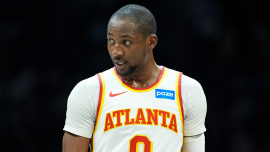
The alternative would be to dangle that 2032 first-round swap in a trade. That could allow the Lakers to pay Kuminga more in a sign-and-trade, as the Hawks are reportedly open to taking on Jarred Vanderbilt to facilitate such a deal. Doing so would leave the Lakers completely without first-round capital to trade. Could they do better than Kuminga? The Thunder love collecting deep future draft assets. Would they want that 2032 swap enough to dangle Dort? Probably not. Perhaps the rebuilding Mavericks are open to trading PJ Washington, mostly to get off the long-term contract Nico Harrison gave him?
There are no good answers here. Wings are the most in-demand players in the NBA, and the Lakers left themselves minimal resources to try to find any. This will be an uphill battle for Rob Pelinka.

3. Can the Pistons add some offense?
Jalen Duren remains unsigned at this point, but restricted free agency minimizes the severity of that question. One way or another, Duren will be on the Pistons next season unless they decide they don’t want him. It might be on the one-year qualifying offer. It might be on a long-term contract worth less than Duren hoped. I suppose there’s an outside chance that he signs an offer sheet with another team (the Nets are really the only financial possibility at this point, barring more moves), but the Pistons would just match it. There’s not much of a question here. Duren will probably stay in Detroit. It’s just a matter of how.
Here’s the bigger issue in Detroit: who’s going to score? Aside from the lateral and largely stylistic move from Tobias Harris to John Collins at power forward, almost everything the Pistons have done this offseason feels like a setup for something. Isaiah Joe is a great shooter, but they already had that archetype addressed through Duncan Robinson. They didn’t necessarily need to dump Caris LeVert or Isaiah Stewart, but they did so and have done little with the flexibility those trades created.
The Pistons still badly need a secondary creator, and they’ve been linked to basically everyone of note. Norman Powell went to Chicago. Zach LaVine apparently is not getting a buyout. Would the Bucks reroute Tyler Herro, whom Detroit held prior interest in? Would the Nets reconsider a Michael Porter Jr. trade if they don’t extend him at some point in the offseason? There’s a clear hole to be filled here — perhaps even two if you consider Collins a backup rather than a starter. At some point, you’d figure the Pistons are going to add someone else who can dribble, pass and shoot.

4. Will the Knicks add another backup center?
The Knicks are down to about $3.2 million in second-apron space, with one roster spot left to fill. The obvious way to use it would be to add a third center. Andre Drummond is an obvious downgrade from Mitchell Robinson, but lost in that shuffle is the fact that Ariel Hukporti left to join the 76ers. The Knicks need more front-court depth, and there’s not an obvious way to get it.
They tried and failed to trade for Yves Missi. They could look to other centers on rookie deals. While they’d obviously prefer to avoid giving up what precious draft capital they still have, it’s worth noting that their 2033 first-round pick — along with swaps in 2030 and 2032 — are tradable. It wouldn’t be terribly surprising to see the Knicks dangle Deuce McBride in such a trade, either. They’re loaded with guard depth, and McBride is entering the final year of his team-friendly, three-year extension. If the Knicks are going to shop for a bigger name, it might make more sense to do so during the season, when filling out roster spots is cheaper and they’d therefore have a bit more flexibility to trade for someone making actual money.
The current free agent pool isn’t all that encouraging. Nick Richards is probably the best-known quantity available, and he was just fourth on Phoenix’s depth chart before getting shipped to Chicago. New York has also been linked to Jonas Valančiūnas, who was recently waived by the Nuggets. The Knicks had success at guard by signing a few players, including Malcolm Brogdon and Garrison Mathews, to non-guaranteed deals to compete for a job. The winner of that competition was Landry Shamet, who ultimately became essential. Perhaps the Knicks take a similar route at center, though that talent pool is obviously shallower. One way or another, though, it seems like a lock that New York adds a big in some capacity. Given how frequently Karl-Anthony Towns gets into foul trouble, depth at center is vital.

5. Have the Nuggets scared off Peyton Watson’s market?
One of the wings the Lakers could have chased is Peyton Watson, Denver’s restricted free agent forward who had a breakout season a year ago despite injuries cutting it short. The Clippers were reportedly in the mix for Watson, but after signing Rui Hachimura, they no longer can create the sort of cap space they’d need to sign him to an offer sheet. Brooklyn still looms as the cap-space boogeyman. But Watson hasn’t been linked to the Nets in any serious reporting thus far.
The notion of a large offer sheet for Watson would presumably terrify Denver. Even after waiving Valančiūnas, the Nuggets have only around $8 million in second apron room with at least four roster spots to fill. Keeping Watson at the $25 million or so he was expected to command would have vaulted the Nuggets deep into the second apron, and thanks to their repeater status, created a historic luxury tax bill that would have pushed their total salary obligations to around $400 million. That’s why, entering the summer, so many expected the Nuggets to make a cost-cutting trade, but they have made it clear through the media that they have no such intention. Whether that has anything to do with Nikola Jokić delaying his contract extension, we can’t say.
Nikola Jokić plans to wait until next offseason to extend: What that means for the Nuggets
Sam Quinn
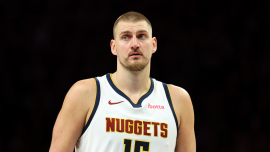
Either way, the messaging seems to have worked. There is no imminent danger of a giant Watson offer sheet, and that puts the Nuggets in position to either sign-and-trade him for a strong package of picks, keep him on a favorable long-term deal or retain him on his one-year, $6.5 million qualifying offer. The latter would make him an unrestricted free agent next offseason, a scary proposition in theory, but a more manageable one with Cameron Johnson’s contract coming off their books in a year. Denver isn’t quite out of the woods yet. The Nuggets still might wind up shedding salary in some form. But for the moment, at least, there doesn’t appear to be another team positioned to give Watson the sort of hefty, long-term offer sheet the Nuggets feared.

6. What will the Nets do with their cap space?
Something to keep an eye on: Brooklyn’s reported acquisition of Julius Randle hasn’t been made official yet. The moment the Nets actually land him, around $13 million of their cap space vaporizes because of how much more expensive he is than Nic Claxton and the inclusion of No. 28 overall pick Joshua Jefferson. We don’t know for certain why that trade hasn’t been completed. The easiest explanation is that the Nets want to hold on to that space just a little longer in case there’s a way they can use it.
Of course, by July 10, most of the notable free agents are off the market. If the Nets were going to take a swing at Watson, that probably would have happened by now. Brooklyn could renegotiate and extend Porter Jr. in order to effectively front-load a deal for him now while the rest of their roster is cheap, but we’ve heard little movement on that front. They’re an obvious trading partner for the Thunder if they decide to shed more money, but the Nets just signed Keon Ellis, so do they really want another defensive guard like Dort?
There are dozens of productive ways to use cap space. Perhaps the Nets could facilitate a trade or shop in the free-agent bargain bin. But until that Randle deal is finished, it’s reasonable to assume that Brooklyn is at least trying to make the most of it.
7. Are the Pelicans going to do… anything?
You can explain almost any single decision the Pelicans have made easily enough. They have set an impossibly high price on Trey Murphy? Okay, reasonable. He’s a 26-year-old wing on a team-friendly contract. Everyone wants him. By all means, ask for the Mikal Bridges haul. They won’t trade Yves Missi to the Knicks. Well, centers are in vogue right now, and the Pelicans probably need a long-term rim-protecting prospect to pair with Derik Queen. Zion Williamson is still on the team even though he’s an iffy fit with Queen. He played well last season and has a mostly non-guaranteed contract. It makes sense that they wouldn’t want to just give him away.
And then you look at the totality of their offseason and realize the Pelicans have not added a single player. Not one, at least on a standard contract. Their only draft pick, Jaron Pierre Jr., is likely to wind up on a two-way deal as most late second-round picks do. Their only free agent move thus far has been bringing back 37-year-old DeAndre Jordan. They have 14 players signed. They technically don’t need to add anyone.
But does that mean the Pelicans are really running back a 26-win team? A 26-win team, mind you, whose win total was actually inflated by circumstance. They had the NBA’s worst record as late as Jan. 22. And then the tankers, well, tanked. Half of their 16 wins beyond Jan. 22 came against the Grizzlies, Kings, Jazz, Wizards and Mavericks, all of whom were actively trying to lose games last season. Lottery reform killed tanking.
For all we know, in an honest version of the 2025-26 season, the Pelicans might have had the NBA’s worst team. The only change they’ve made to that team has been hiring Jamahl Mosley as coach. Is that really it? What is the plan here? Will we even find out this offseason?
TNG – Latest News & Reviews


