
Prepaid vs crypto in 2026: where paysafecard still fits
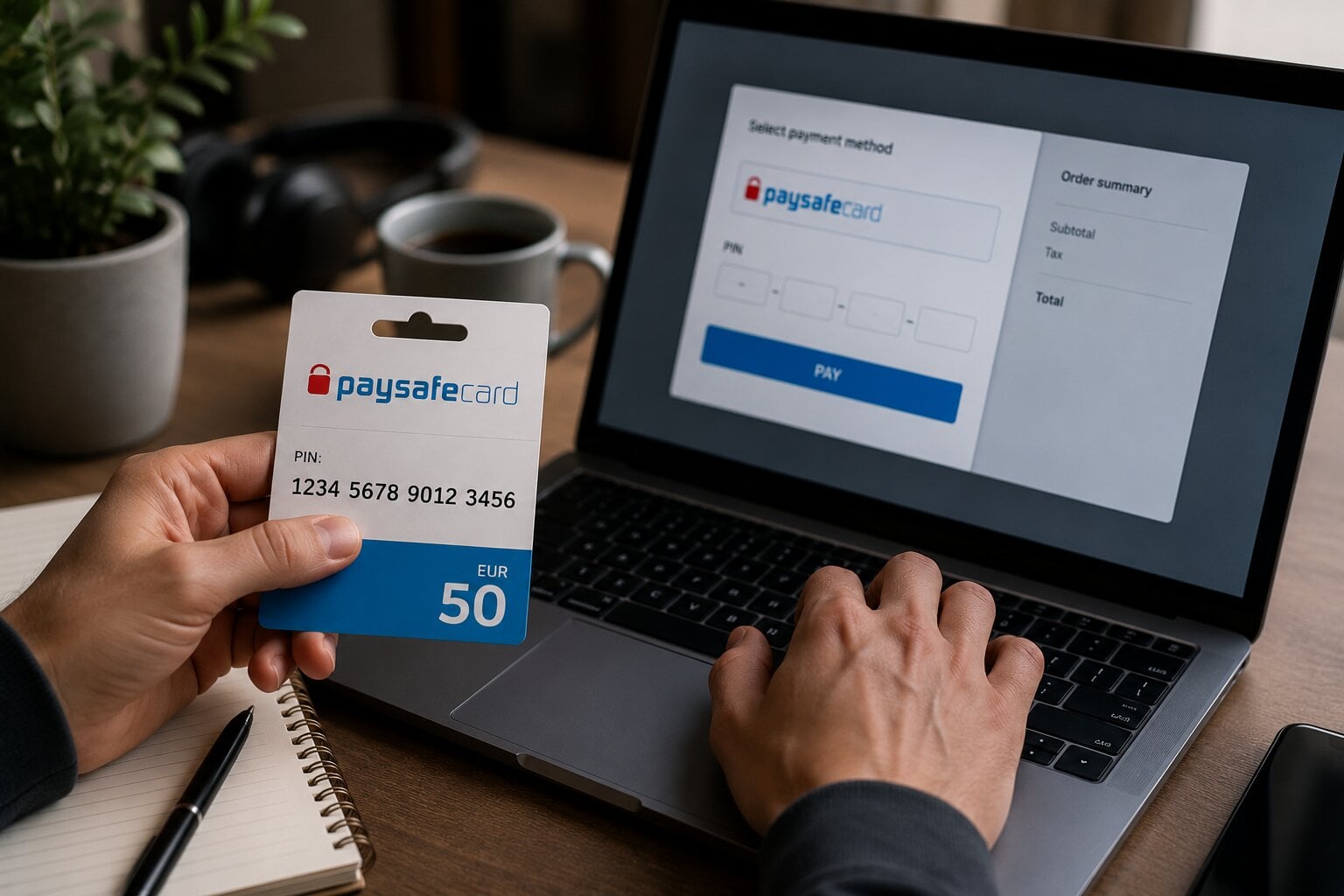
Instant crypto rails and one-tap open banking were supposed to make the prepaid voucher obsolete. A payment method you buy with cash at a corner shop, then type in as a 16-digit code, sounds like a relic of the dial-up web. Yet paysafecard is still here, still issued across dozens of countries, and still growing in exactly the moments the slick digital rails leave a gap.
That gap is worth understanding, because it says something about what people actually want from a payment, which is not always speed. Sometimes it is privacy. Sometimes it is a hard limit on what they can spend. And sometimes it is simply not needing a bank account at all.
There is an irony here for anyone who bought the early crypto privacy pitch. A public blockchain records every transaction forever, and chain-analysis firms have made pseudonymous wallets far easier to trace than most holders assume. A voucher bought with cash and spent once as a PIN leaves no such trail. On the narrow question of payment privacy, the low-tech option quietly beats the high-tech one.
How a prepaid voucher actually works
The mechanics are deliberately low-tech. You buy a paysafecard at a shop, kiosk or petrol station, or online, in fixed amounts. You get a 16-digit PIN. To pay, you enter that PIN at the checkout, and the value is drawn down until it runs out. There is no card number to store, no account to log into, and nothing linked to your current account.
Behind that simplicity sits real regulation. Paysafecard is an electronic money product issued by a Paysafe group company that is authorised in the UK as an e-money institution by the Financial Conduct Authority, which means the float backing your voucher is subject to safeguarding rules rather than sitting in an unregulated pool. The company reports a user base in the tens of millions across more than 50 countries, which for a “legacy” method is not a rounding error. Treat the exact headline figures as the provider’s own marketing numbers rather than audited data, but the direction of travel is clear enough.
Why people still reach for cash-based payment
The appeal comes down to three things the digital rails handle badly.
The first is access. Not everyone has a debit card or wants to link one to every site they use. A prepaid voucher lets someone pay online using cash they already have, which matters for younger users, the under-banked, and anyone rebuilding after credit trouble.
The second is privacy. Because the PIN carries no personal or bank details, the merchant never sees who you are at the payment layer. In an era where most payments quietly build a profile of you, paying with a code you bought for cash is one of the few genuinely low-footprint options left.
The third is control. You can only ever spend what is loaded on the voucher. There is no overdraft, no credit line, no “just top up a bit more” prompt. For anyone who wants a firm ceiling on discretionary spending, that hard cap is a feature, not a limitation.
Where prepaid fits: age-gated and regulated sectors
Prepaid vouchers show up most in places that would rather not hold your card details and that need a clean, self-limiting deposit. Digital goods, gaming top-ups and online entertainment are the obvious ones. Regulated sectors are another.
Because paysafecard is deposit-first and carries no bank details, it has become a common option in age-gated sectors. One rundown of how prepaid vouchers work at licensed UK casinos shows the typical deposit flow and the identity check that still applies before a payout. It is a useful illustration of the trade-off in practice: the deposit is anonymous at the point of payment, but a UK-licensed operator must still verify who you are before releasing winnings, because Gambling Commission rules require it. If you are using prepaid to fund entertainment of that kind, the same sensible habits apply as with any payment: only use licensed sites, set a limit before you start, and lean on free tools such as GambleAware if spending ever stops feeling like a choice. It is an 18+ activity, and prepaid’s hard cap is a genuinely useful guardrail here.
The trade-offs worth knowing
Prepaid is not a free lunch, and it is worth being honest about where it falls short.
It is built for paying in, not cashing out. Picture funding an account with a £50 voucher, coming out ahead, and then finding the only way to withdraw is to open a PayPal account or a bank transfer. That means a second login, and an identity trail that now attaches to activity the deposit had kept private. The money went in anonymously; it rarely comes back out that way. So paysafecard’s privacy is real at the deposit stage and partly undone at the payout stage, which is a limitation worth planning around rather than discovering after the fact. There is also no chargeback in the way a card gives you. Once a PIN is spent, the usual card dispute route is not available, so buying from unfamiliar merchants carries more risk. Top-up and spend limits apply, which is precisely the point for some users and an annoyance for others. And the PIN is effectively cash: lose it or get phished for it, and the money is gone.
Prepaid, crypto or open banking?
None of the modern rails makes prepaid pointless, because they optimise for different things. A quick comparison:
Method
Best for
Weak spot
Prepaid voucher
Privacy, no bank needed, hard spending cap
Deposit-first, no chargeback
Crypto
Speed, self-custody, cross-border
Volatility, key management, still niche at checkout
Open banking / pay by bank
Instant bank-to-bank, fee-free
Requires a bank account, full identity trail
Debit card
Universally accepted, fraud protection
Ties every payment to your account
Read that table and the pattern is obvious. Speed and rewards belong to the digital rails. Privacy and a built-in spending ceiling belong to prepaid. They are not really competing for the same job.
The comparison a crypto-native reader will care about most is with stablecoins. They promise fast, cheap settlement, but they still sit on a public ledger and still, in most consumer flows, expect an exchange account with full identity checks behind them. Prepaid trades every one of those properties away for a cash-bought PIN. Looking to 2026 and beyond, two forces pull prepaid’s niche in opposite directions. Open banking is making instant bank-to-bank payments the default for anyone who already has an account, which squeezes prepaid on sheer convenience. At the same time, tighter UK and EU e-money and affordability rules are nudging some users toward methods with a built-in ceiling, which is exactly what a prepaid voucher is. The niche narrows on one side and widens on the other.
The niche that keeps prepaid alive
It is tempting to file prepaid vouchers under nostalgia, alongside scratchcards and phone-box top-ups. That misreads why they persist. Paysafecard survives because a real slice of people, some by preference and some by necessity, want to pay online without a bank account, without a data trail, and without the option to overspend. Until the shiny rails solve for those three things at once, and they show little sign of trying, there will be a queue at the kiosk. Legacy tech does not keep growing. Useful tech does.
Disclaimer: This article is provided for informational purposes only. It is not offered or intended to be used as legal, tax, investment, financial, or other advice.
TNG – Latest News & Reviews


