
iGaming Market Weekly Report: July 13-19, 2026
The final week of FIFA’s World Cup cycle has been referred to as a transition time for the global iGaming demand. As the tournament was concluding, the football-related momentum tapered in the majority of markets and new catalysts began to emerge from domestic competitions, regulatory changes and local market developments.
The positive trends were registered mainly around domestic football activities and market developments. Russia (+14.5 %) and Greece (+14.3 %) were in the leading group after the Super Cup and the reporting from the regulators gave rise to some renewed interest. Moldova (+11.5 %) observed its rebound without any clear triggers, while Guinea (+10.7 %) and Liberia (+7.3 %) benefitted from national teams and AFCON-related interests.
The negative trends were mainly determined by the World Cup hangovers, regulatory transitions and the baseline’s compression.
With fewer World Cup matches to come, small markets demonstrated the maximum volatility and the temporary football-driven interest returned back.
Top 5 Gainers of the Week
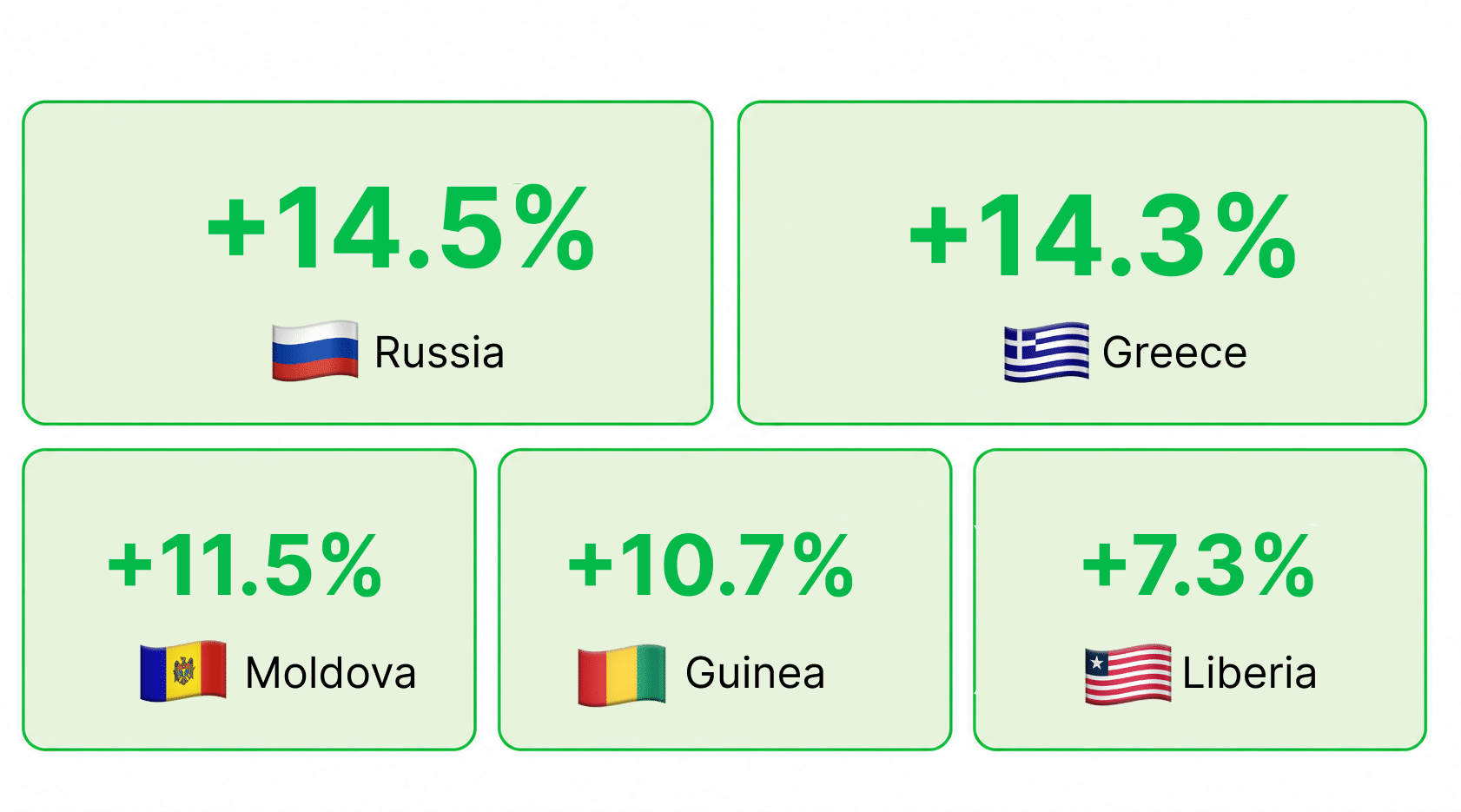
Russia (+14.5%)
For the first time, Russia made the top list of gainers, fueled by activities happening locally in the soccer arena. The triggering event was the Russian Super Cup game that Zenit St. Petersburg played against Spartak Moscow on July 18 in Nizhny Novgorod. It was a 1:1 draw at the end. Later on Zenit won 4–2 on penalties.
Greece (+14.3%)
Greece got back from a previous week decline of -20.7% as two distinctive events piqued market interest. First, the release of Stoiximan Super League fixture schedule was on July 16, creating a buzz around local soccer market ahead of a new stadium season. Another reason that contributed to an increase in attention is that the report of Hellenic Gaming Commission, which underlined the growth of Greek regulated gambling market, got published.
Moldova (+11.5%)
The trend corresponds with the ongoing LIGA 2026–27 season, which started on June 27 and lasted until the end of the reporting period.
Guinea (+10.7%)
No specific country-related factor was indicated. The trend probably arose from a general increase in football-market awareness and qualification for AFCON rather than due to some one event.
Liberia (+7.3%)
The market showed modest growth during a period of increased African football attention, but no specific regulatory or sporting event directly explains the movement.
Top 5 Decliners of the Week
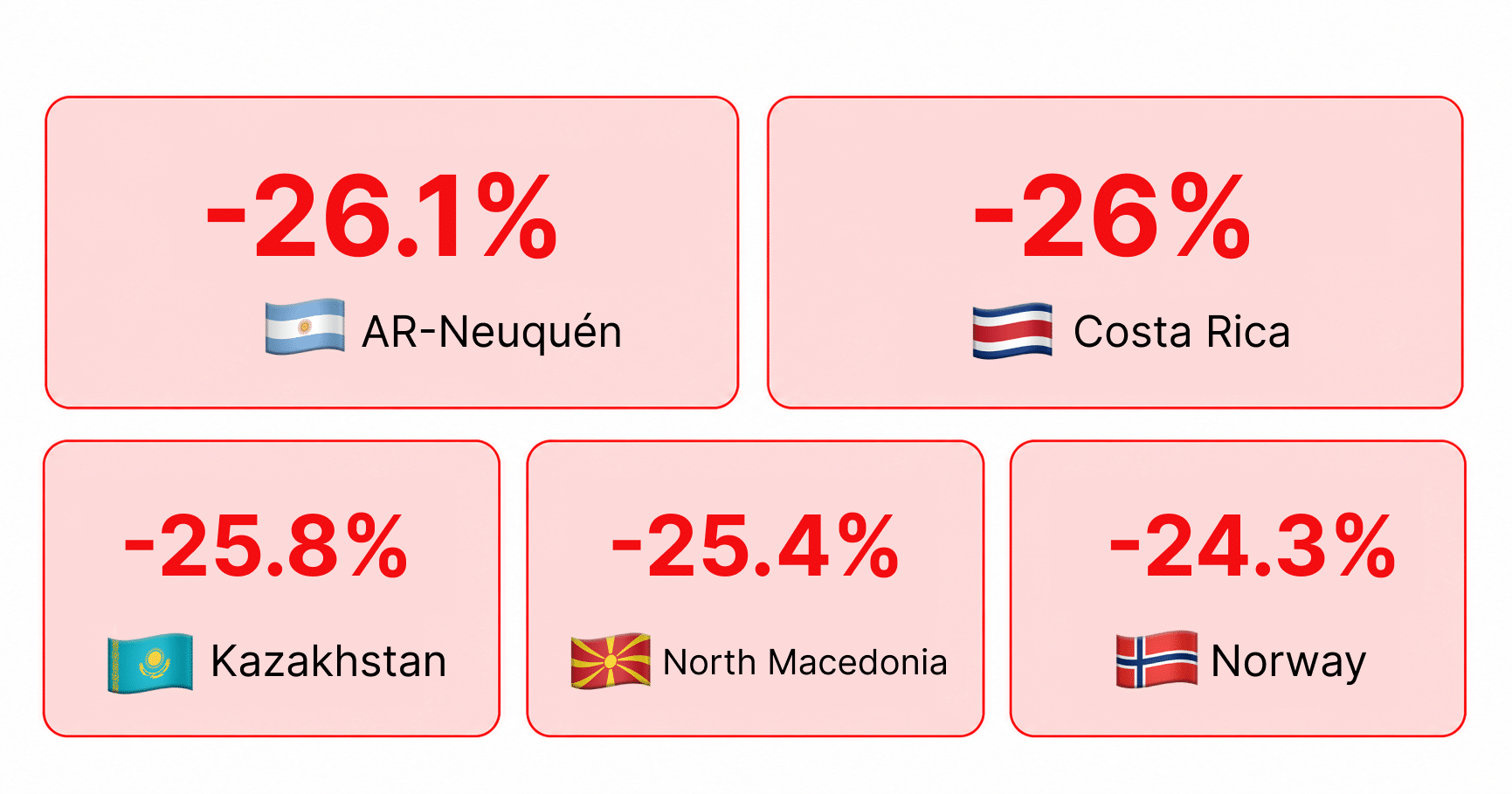
AR-Neuquén (-26.1%)
Neuquén province in Argentina has suffered the biggest fall of the week. The downfall occurred even though the country has advanced in the World Cup tournament that shows that the locality was unable to utilize culmination of success of the World contest into continuous demand in the local market.
Costa Rica (-26%)
Costa Rica made its second consecutive entry on the list of the biggest fallers and registered a decline of 25.5% last week. The absence of the country in the 2026 World Cup meant that Costa Rica has lost the central impetus driving football-related demand.
Kazakhstan (-25.8%)
The market continues to be under structural pressure caused by previous law enforcement measures, including restrictions on payments aimed at offshore gambling platforms, and the Unified Betting Accounting System. However, no new law, law enforcement operations or sporting events that took place from July 13-19 can explain the decrease of demand in Kazakhstan for the week.
North Macedonia (-25.4%)
North Macedonia was able to reverse previous week’s positive trend of +17%. The decrease followed the implementation of the new Law on Games of Chance that became effective on July 14.
Norway (-24.3%)
The country has one of the most notable tournament narratives as it beat Brazil in the Round of 16 on July 5. Norway’s World Cup campaign ended in the quarter-finals after a 1–2 extra-time defeat against England on July 11. Both events occurred before the reporting window, and no replacement fixture or domestic catalyst sustained demand.
Market Spotlight: AR-Neuquén (-26.1%)
The last week of the World Cup has further demonstrated how quickly football-inspired iGaming demand can fall once greater topics and stories come to and end. Certain declining markets have not experienced active suppression but rather the effects of event-driven compression after a peak in temporary demand.
In the case of, Neuquén (-26.1%), Costa Rica (-26.0%) and Kazakhstan (-25.8%), the respective decline occurred without any fresh in-window triggers, showing the volatility of smaller markets where minor events have very large effects.
Norway exemplified the case of a typical event hangover, after its football squad shocked everyone by qualifying for one of the greatest tournaments in history, the national team was eliminated from the World Cup, which was the main reason for high betting activity declined. In the case of North Macedonia, the situation was somewhat different because regulatory change and momentum affected each other creating downward pressure.
All in all, the trend is obvious and as the World Cup ended, the markets dependent on events of the World Cup started returning to their baseline, while local football calendars and regulations become the primary influencers of weekly performance.
Original source: Blask.com
Blask Index tracks real-time iGaming player interest via AI-analyzed Google search data, updated hourly and filtered to remove low-intent noise (scams, complaints). WoW% measures momentum: positive indicates growing attention; negative indicates declining attention.
TNG – Latest News & Reviews


